
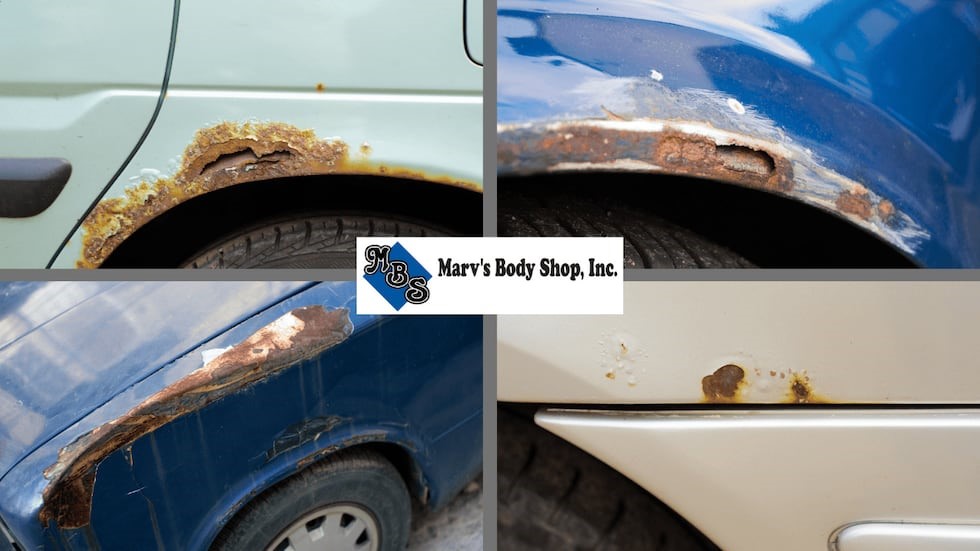
Midwest drivers know the drill. The first big snow hits, the plows come out, and by morning, roads are coated in a gritty mix of slush and salt.
It keeps families safer on icy streets, but it can be brutal on vehicles—especially in places where winter hangs on for months. Left alone, that salty spray can start rusting critical metal in a matter of weeks.
Road salt works by lowering the freezing point of water so ice can melt, but mixed with moisture it becomes highly corrosive.
It splashes into wheel wells, packs into rocker panels, and clings to the undercarriage, quietly attacking steel, brake and fuel lines, and suspension parts. Even small rock chips in paint can give salt a way to reach bare metal and start bubbling, flaking, and rust.
The team at Marv’s Body Shop has been helping drivers stay ahead of that damage since 1971.
Their technicians see the same problem every winter: what starts as a little surface rust can turn into bigger structural or safety issues if it’s ignored. Catching it early often means a straightforward repair to a panel or seam instead of more extensive metal work down the road.
Simple habits go a long way. Regular winter washes, especially ones that clean the undercarriage, help rinse away salt before it can sit and do its worst. Inspecting lower doors, wheel arches, and the trunk lip for tiny rust spots or bubbling paint can reveal trouble early. Addressing paint chips and scratches before winter—or as soon as you notice them—helps keep bare metal sealed from the elements.
When rust has already started, an experienced body shop can clean and repair affected areas, rebuild or replace damaged panels, and refinish them so they’re protected again.
Marv’s Body Shop uses high-quality materials and modern repair techniques aimed at getting vehicles safely back on the road and extending their useful life, whether the damage comes from a fender bender, years of salt exposure, or both.